
Guided Tours of St Ives
We offer a range of leisurely walking tours around St Ives, aiming to give you some insights into the history, the art and the people of this beautifu


We want you to stay safe while you’re at the beach. Our helpful tips will help you stay incident-free.
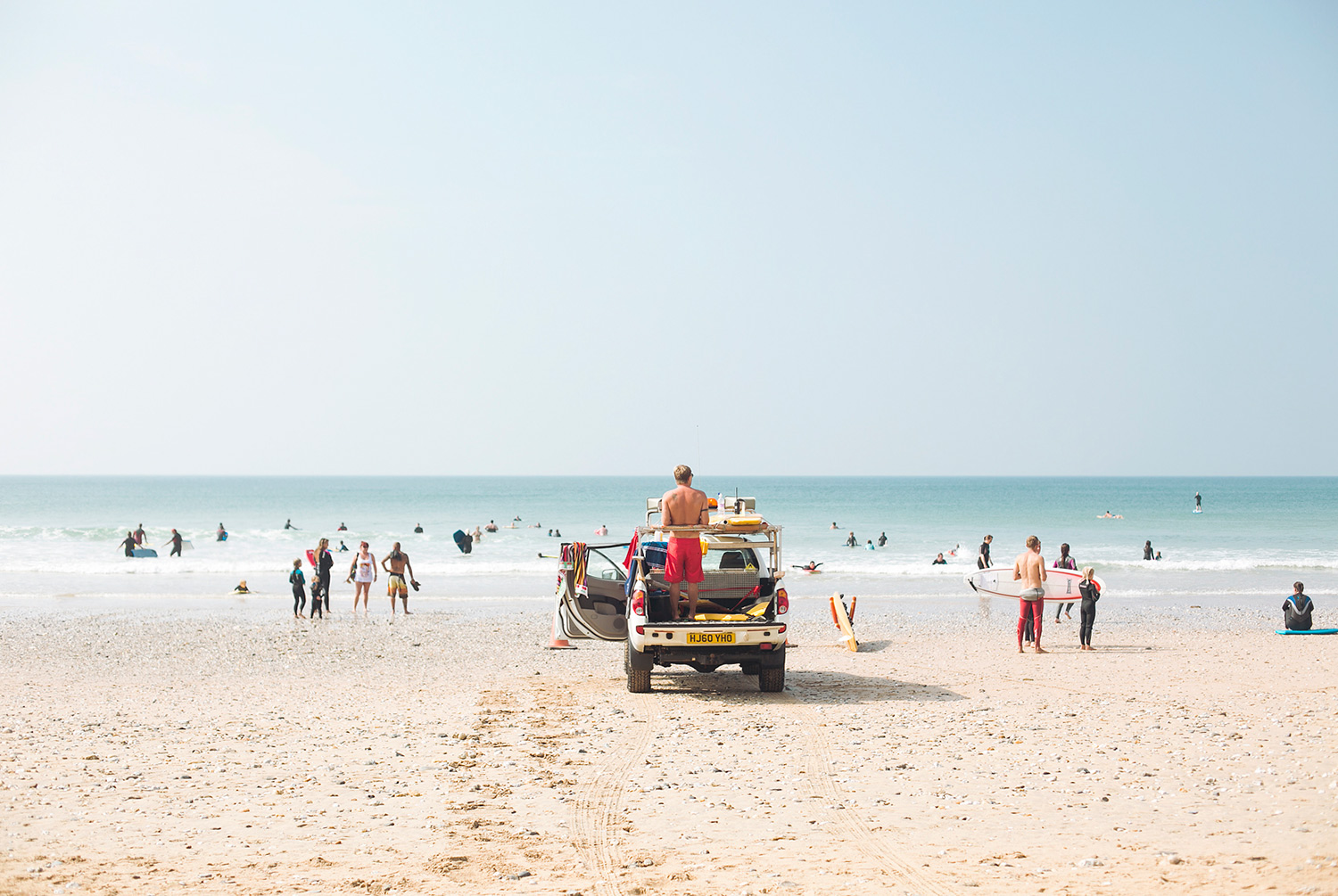
Porthminster and Porthmeor are both RNLI lifeguard-operated beaches – Raraidh Monies
When you’re heading to a beach, we urge you to respect the water and visit a lifeguarded beach. On a lifeguarded beach there are trained professionals to help keep you safe – they’ll be on hand if something goes wrong, in or out of the water. It’s easy to search for lifeguarded beaches to make sure you and your family have a safe and fun trip to the coast.
Check our Beaches & Coastline page to see find the nearest lifeguarded beaches. Or use the RNLI find my nearest tool, search on goodbeachguide.co.uk or irishwatersafety.com to find a lifeguarded beach near you.
So now you’re ready to hit the beach there are a few important things to remember, whether lifeguards are on duty or not.
When you arrive at the beach the first thing you might see is a sign giving you all the information about the beach you’re visiting. This includes important safety info on the hazards specific to the area. The signs generally look like the one on the left and use two different types of warning symbols. Do you know the difference?
This is a prohibition sign – don’t do it!
If the beach you’re at is not lifeguarded, please take extra care if you are going into the water. If lifeguards are on patrol, then you’ll need to know your flags:
Lifeguarded area. Safest area to swim, bodyboard and use inflatables.
For surfboards, stand-up paddle boards, kayaks and other non-powered craft. Launch and recovery area for kite surfers and windsurfers. Never swim or bodyboard here.
Danger! Never go in the water under any circumstances when the red flag is flying.
Indicates offshore or strong wind conditions. Never use inflatables when the windsock is flying.
Rips are strong currents running out to sea, which can quickly take you from the shallows out of your depth.
Learn how to spot and avoid rip currents and what to do if you get caught in one.
A beach can seem like a vast playground but the tide can come in surprisingly quickly. Getting cut off by the tide contributes to a significant number of RNLI rescues every year.
Learn how to avoid getting cut off by the tide.
Waves are great fun, but they can be dangerous. They have different characteristics depending on the beach and conditions – understanding how they work will keep you safer.
Learn how waves work and get our four top tips for staying safe.
Anything below 15°C is defined as cold water and can seriously affect your breathing and movement. Average UK and Ireland sea temperatures are just 12°C.
Learn about the effects of cold water shock and how you can minimise the risk.

Children enjoying a dip in the harbour – Nick Pumphrey
Before you get in the water it’s important to consider your personal fitness as the sea can be a very demanding environment. Swimming is one of the best year-round activities to help prepare your body so we’d recommend you get in the pool and start practising now!
Just be aware that sea swimming can be more challenging than the pool so before you start a watersport it’s worth jumping in between the red and yellow flags and familiarising yourself with the conditions.
Every Summer, the RNLI and Amateur Swimming Association (ASA) hold Swim Safe sessions for 7-14 year olds at selected beaches and lakes. The sessions are free and teach children vital skills to stay safe in and around open water.
And our annual Beach Smart campaign helps thousands of families stay safe while having fun in the surf.
Blow-up toys and airbeds are designed for pools, not the sea where they can easily be swept out. If you do use them at the beach, then:
Bodyboarding is fun for all the family, but every year our lifeguards rescue thousands of people who get caught out. The most important advice is to always stay with your board as it will keep you above the water, even if you feel you are drifting out to sea. Your board will keep you afloat and make you much easier to spot if our lifeguards need to rescue you.
Here’s a bit more information about the kit you should have and a few rules of the road.
You’ll need the following kit to get started:
If you get into difficulty it’s tempting to try and swim to safety but you should always stay with your kit as it will keep you afloat and make you easier to find in an emergency.
A whistle is a simple and effective method of calling for help when close to shore. When venturing further offshore carry a suitable means of calling for help, such as a waterproof and fully charged VHF or flares.
Don’t forget the international distress signal of hand waving and shouting for help.
Sunburn can ruin your holiday and increase the risk of skin cancer in later life. According to our friends at the Karen Clifford Skin Cancer Charity Skcin, we experience over half our lifetime’s exposure to the sun before we reach the age of 21.
So please, keep safe this Summer and follow the five Ss of sun safety:
For more info on sun safety visit skcin.org.
The waters around the UK and Ireland can be very cold, even on a warm Summer’s day. A wetsuit will keep you warm and comfortable, allowing your body to perform more efficiently.
Wetsuits are generally made from neoprene and are designed to maintain your body’s core temperature and protect you from the elements. They work by letting a small amount of water in, holding it next to your body, which then heats up from the natural energy produced during exercise. For this reason it’s vital to choose a well-fitted suit to avoid being flushed with cold water. Remember a wetsuit is usually worn with the zip at the back!
Wetsuit thickness is measured in millimetres of neoprene: the thicker the suit the more insulation. As a general rule in the UK and Ireland most people use full suits, which means long arms and long legs:
Children are safest when supervised.
As soon as you get to the beach, agree a meeting point in case of separation. If the beach runs a children’s safety scheme, using wristbands or tickets, take part. They’re free and they work. If you are on an RNLI-lifeguarded beach, visit the lifeguard hut on arrival and they can give you special wristbands to put your contact details on.
If a child does go missing: